
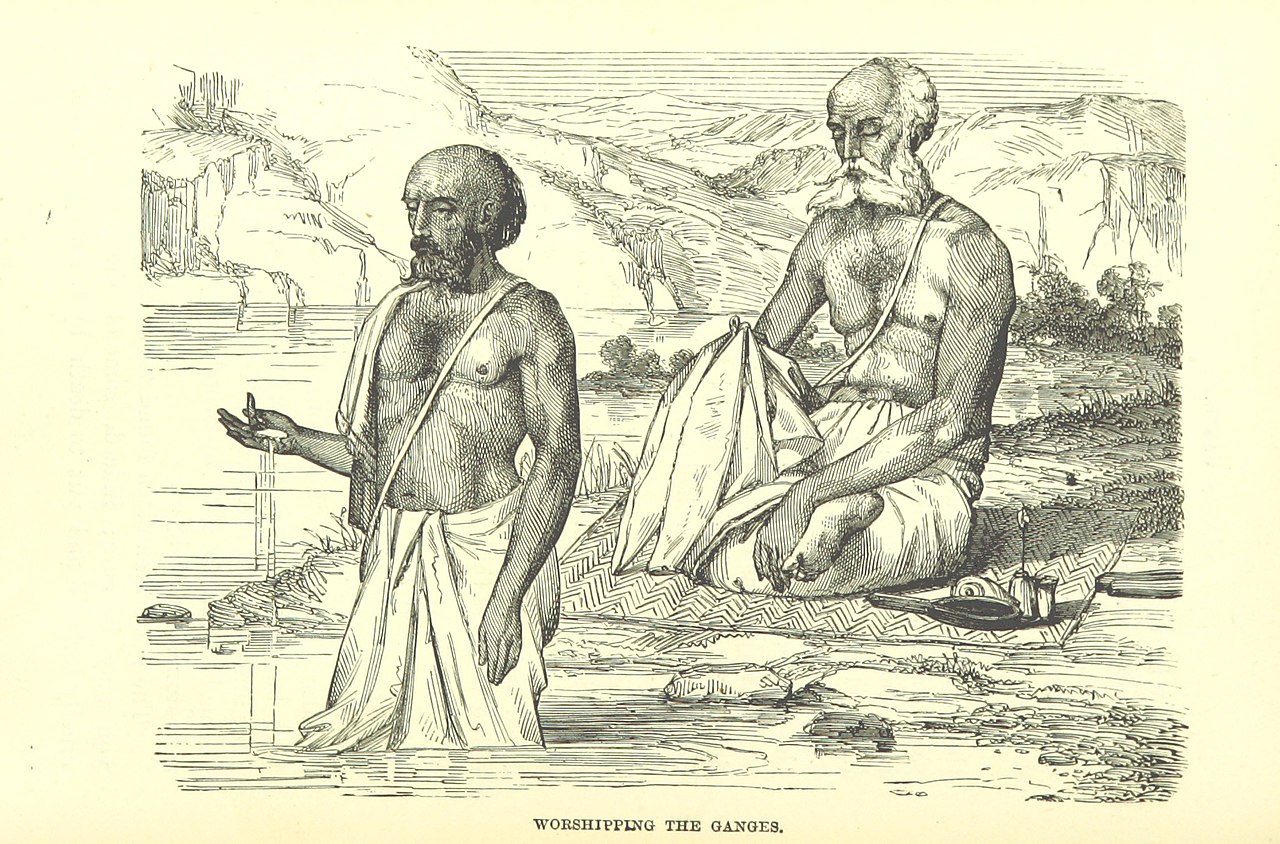
A Brahmin is a term used in Hinduism to refer to a member of the priestly caste or varna, traditionally considered the highest caste in the Indian caste system. Brahmins are associated with religious and scholarly activities and have historically been responsible for performing rituals, maintaining sacred texts, and providing spiritual guidance to the community. They are often depicted as having a role in preserving and transmitting cultural and religious knowledge.
In Hindu philosophy, Brahman (often spelled with a capital “B”) is the ultimate reality or absolute reality that underlies and transcends the physical world. It is considered to be the unchanging, eternal, and infinite source from which everything emanates and to which everything eventually returns. Brahman is often described as being beyond the grasp of human understanding and language, as it is beyond attributes and limitations.
Brahman is a key concept in various philosophical schools within Hinduism, particularly in Advaita Vedanta, which teaches that the individual soul (Atman) is identical with Brahman. This philosophy emphasizes the idea of non-dualism, where the distinction between the individual self and the ultimate reality is considered illusory. The goal of spiritual practice, according to Advaita Vedanta, is to realize this inherent unity and transcend the cycle of birth and death (samsara).
Brahman is also discussed in other philosophical systems within Hinduism, such as Dvaita Vedanta (dualism) and Visishtadvaita Vedanta (qualified non-dualism), each offering different perspectives on the relationship between the individual soul, the material world, and the ultimate reality.
However, the word Brahmin does have a historical connection to the role of philosophers and scholars who were engaged in understanding and explaining the concept of “Brahman.” The Brahmins, as a priestly and scholarly caste, were responsible for not only performing rituals but also for studying and interpreting the sacred texts of Hinduism, which often contained philosophical teachings about the nature of reality, existence, and the relationship between the individual soul and the ultimate reality (Brahman).
Over time, the Brahmins became associated with the intellectual and philosophical aspects of Hinduism, including the exploration of concepts like Brahman, Atman (the individual soul), karma, dharma, and the nature of the universe. They played a crucial role in developing and preserving philosophical ideas, and their insights contributed to the various philosophical schools within Hindu thought.

The transition from being recognized as both philosophers and priests to being primarily associated with the priestly role can be attributed to a combination of historical, social, and cultural factors.
- Social Roles and Specialization: Over time, societies tend to develop a division of labor and specialization. In ancient India, Brahmins initially held roles as both scholars and priests. However, as societies became more complex and specialized, certain roles became more prominent. The Brahmins’ role in performing rituals and ensuring proper religious practices gained prominence, and this contributed to them being associated primarily with priestly functions.
- Conservation of Traditions: The Brahmins were responsible for preserving and transmitting the sacred texts and rituals of Hinduism. This preservation of tradition often led to a focus on ritual practices rather than philosophical exploration. The rituals and ceremonies were considered essential for maintaining social and cosmic order, and this emphasis on tradition contributed to the perception of Brahmins as primarily priests.
- Cultural Changes: As societies evolve, cultural values and norms can shift. The reverence for traditional knowledge and practices might decrease in favor of newer ideas and forms of knowledge. This could lead to a shift in societal perceptions of the roles and functions of certain groups. In some cases, the philosophical aspects of Brahmin roles might have been overshadowed by other cultural developments.
- Simplification of Perception: Complex philosophical ideas like the nature of Brahman can be challenging to understand and explain, especially in a changing society. Over time, the broader population might have found it easier to understand the role of Brahmins as priests conducting rituals rather than as philosophers exploring abstract concepts.
